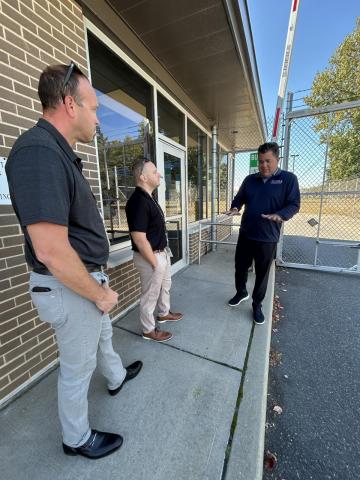
Washington, D.C. — Congressman Nick LaLota (NY-01) reased the following statement after announcing his co-sponsorship of the Aviation Funding Stability Act of 2025, a bill that ensures the Federal Aviation Administration (FAA) continues operating safely and efficiently during a shutdown and that air traffic controllers are paid. The bill would provide automatic, short-term funding for the FAA through the Airport and Airway Trust Fund whenever Congress has not yet enacted regular appropriations or a continuing resolution, such as during a shutdown. LaLota also sent a letter to House Speaker Mike Johnson and House Majority Leader Steve Scalise urging them to bring the Aviation Funding Stability Act to a vote once the House reconvenes. “Air traffic controllers don’t stop working when Washington stops functioning, and their paychecks shouldn’t either,” said Congressman Nick LaLota. “Keeping our skies safe is a 24/7 mission, not a political bargaining chip. That’s why I strongly support this bill to guarantee continued FAA funding and protect the men and women who guide our planes safely through the skies during any lapse in appropriations. Long Islanders expect their government to keep essential services running, and this legislation ensures exactly that. While Congress debates the rest of Washington’s business, we must make sure frontline federal employees can do their jobs safely and without fear of missing a paycheck.” To read the full text of the bill, click HERE. To read the letter, click HERE. Background: The Aviation Funding Stability Act of 2025 would ensure continued funding for the Federal Aviation Administration (FAA) in the event of a government shutdown by allowing the Airport and Airway Trust Fund to sustain FAA operations. Specifically, the bill would: Make trust fund resources available to continue FAA programs, projects, and activities—including operations, facilities and equipment, research and development, and grants-in-aid for airports—at the prior year’s funding levels. Limit operations to the rate of funding provided in the previous fiscal year’s appropriations act, or in the prior year’s continuing resolution if no appropriations act was enacted.
|